In the world of high stakes alpinism where the environment is unpredictable and the movement is precise capturing the perfect shot requires more than just launching a drone. It requires a pilot who understands the rhythm of the mountain and the technicalities of the ascent.
Whether you’re documenting a remote expedition or a technical ice climb, hiring the right visual partner is a strategic decision. Here is what you should look for to ensure your project is captured safely, legally, and professionally.
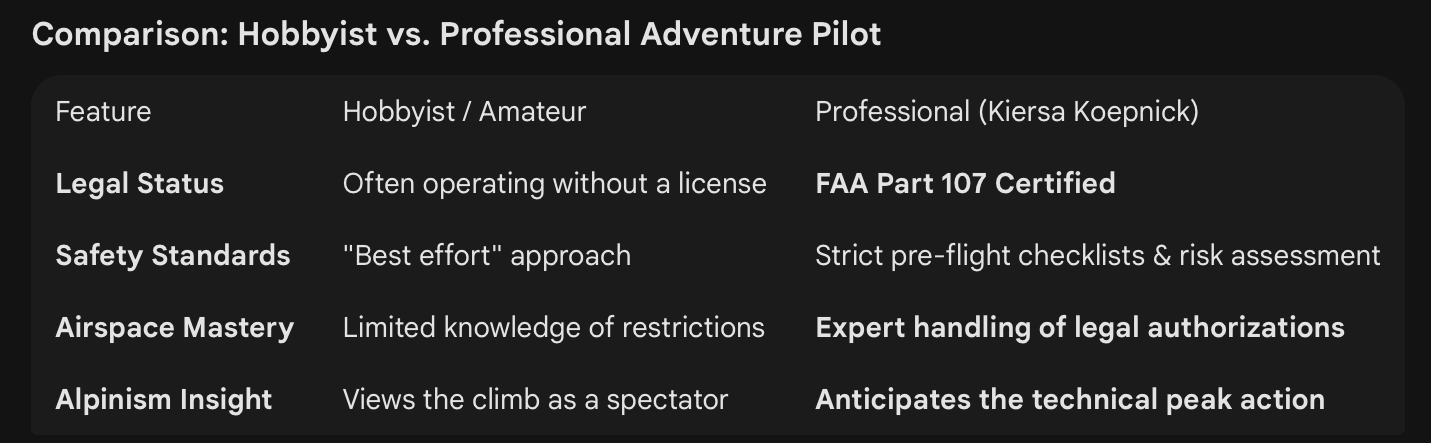
1. Prioritize FAA Part 107 Certification
In the U.S., any drone operation for a business purpose must be conducted by a pilot holding a Part 107 Remote Pilot Certificate.
The Benefit: This isn’t just a legal requirement; it’s a standard of professionalism. A certified pilot is trained in airspace safety, weather interpretation, and risk management essential skills when flying near vertical rock faces or frozen waterfalls.
Pro-Tip: Always verify a pilot’s certification. It’s the simplest way to ensure you are working with a legitimate professional who understands the legal landscape of commercial media.
2. Seek Technical Alpinism Expertise
Can your photographer truly read the mountain? A drone pilot who doesn't understand the mechanics of a technical ice pitch or the "line" of an alpine ridge will miss the peak emotional and athletic moments.
"The best adventure footage comes from a pilot who is also an athlete. They can anticipate a climber’s next move because they understand the discipline of the sport from the inside."
3. Focus on Safety and Compliance
High altitude photography often occurs in sensitive areas private estates, remote backcountry, or restricted airspace. A professional pilot handles the heavy lifting of airspace authorizations and legal compliance long before the first battery is plugged in.
Strategic Planning: Look for a photographer who scouts locations and checks flight restrictions in advance. This prevents legal headaches and ensures the shoot remains focused on the creative vision.
4. Mastery of Extreme Environments
Flying in thin air or freezing temperatures changes how a drone behaves. You need a partner who understands the physics of high altitude flight and cold weather operations. This specialized experience ensures that the "epic shot" is captured reliably, even when the elements are working against you.
Choosing a photographer is about finding someone who respects the mountain as much as the craft. If you are looking for a certified partner who can navigate the technical and legal complexities of the vertical world, let’s talk.